

Angelus Leather Dyes
Angelus
When you need a professional-grade leather dye that won't crack or peel, choose Angelus Leather Dyes. Whether you're dyeing a wallet or a couch, these dyes penetrate deep into leather to deliver permanent, rich color.
Dyeing leather is different from painting — it soaks into the material rather than sitting on top like paint. The final color depends on the base color of the leather, so a white surface dyed with red will turn pink, not true red. Angelus Leather Dyes are designed to enhance and transform brown leather rather than lighten it. Keep this in mind when selecting your dye color.
Tip: Angelus Leather Dyes are super strong and full of color. They work great on leather because they soak in and last a long time. Angelus Suede Dyes are a bit different — they are specially formulated to keep suede soft. Suede is that soft, fuzzy leather, and it needs special care. If you put leather dye on suede, it can make the suede hard, not soft and fuzzy, like it should be.
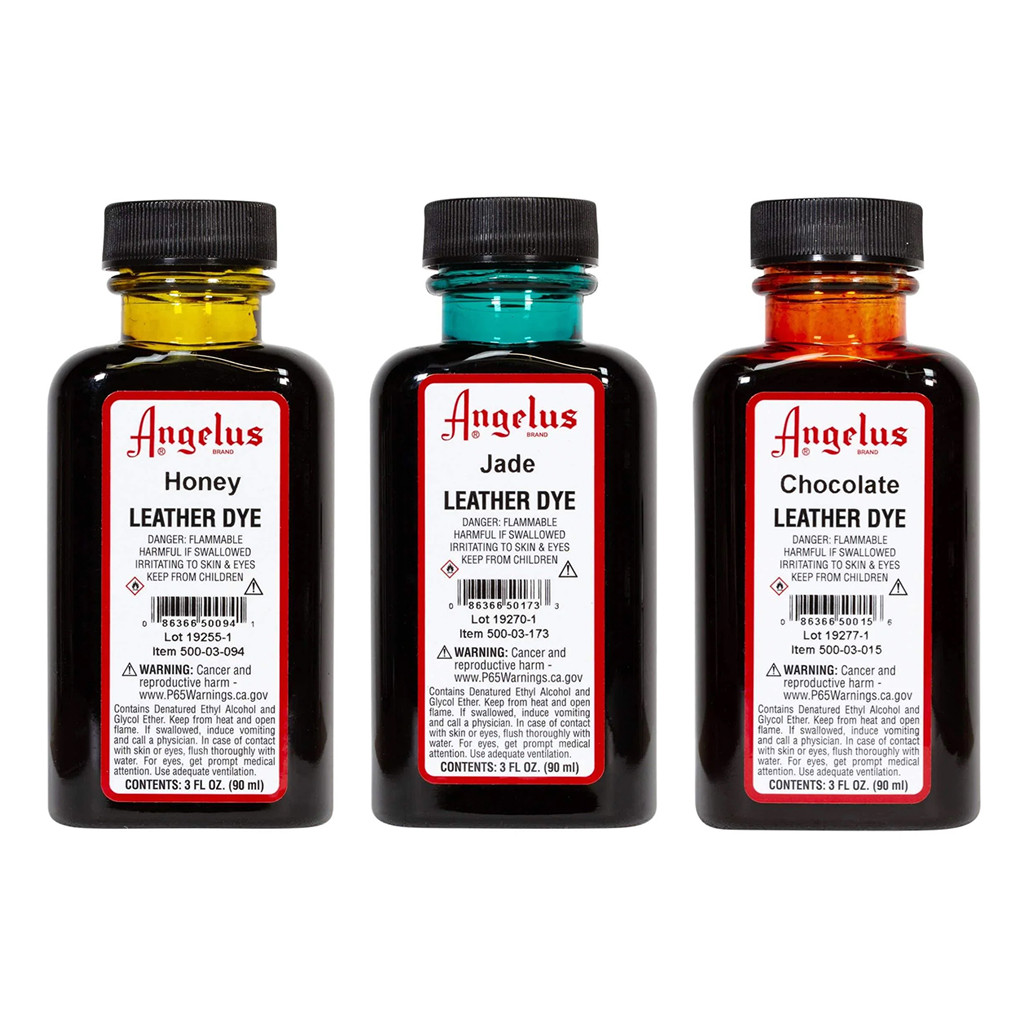
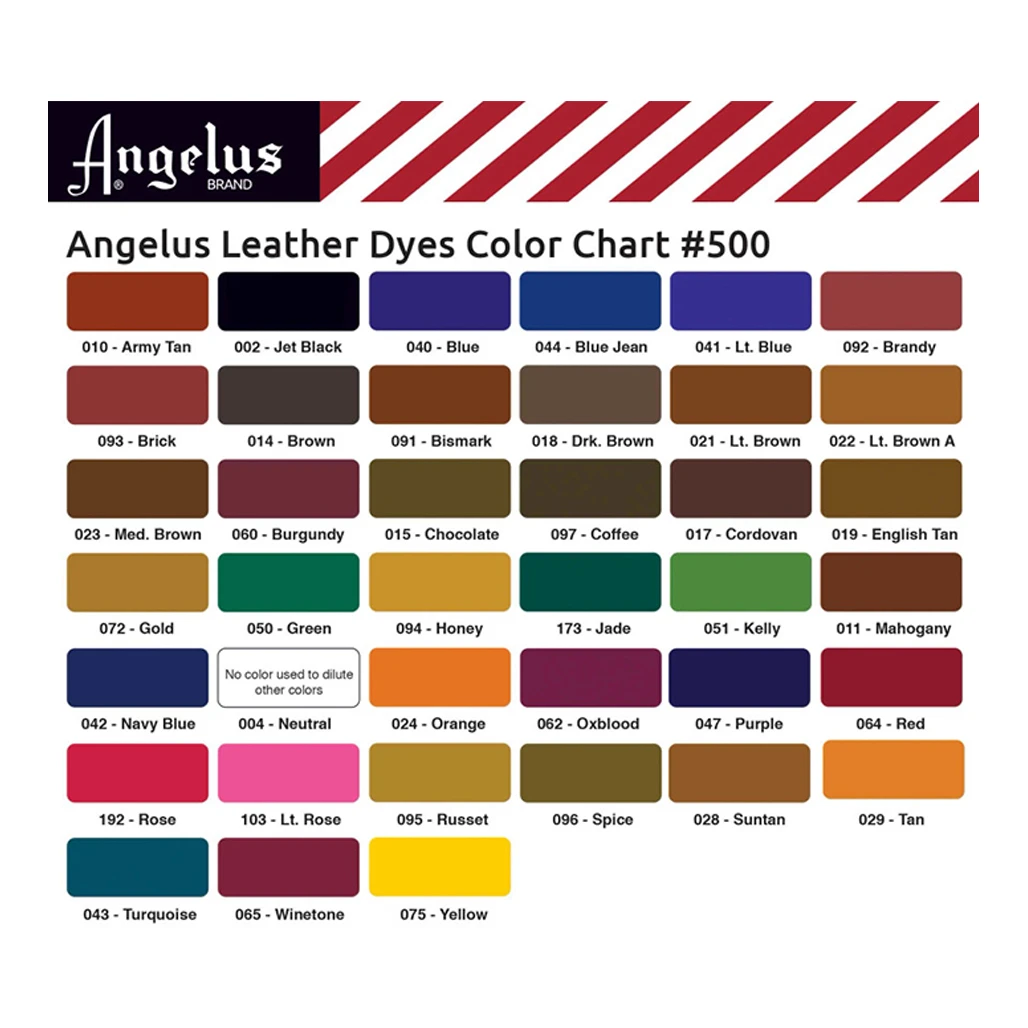
Available in 3 oz bottles and includes 1 wool dauber applicator. Choose from available colors.
How to dye smooth leather using Angelus Leather Dyes:
1. Prep your project by cleaning the surface with a cleaning product, such as Angelus Easy Cleaner. It is necessary to get all the oils and dirt that may be sitting on the leather material, don't skip this step for best results. Pat dry.
2. Wait for leather to completely dry a few minutes. Wipe down with microfiber towel to remove lint.
3. Using a wool dauber (one is supplied with each dye) soak the dye on the dauber. If you are dyeing a large spot, use the dauber fully soaked. If you are doing a smaller section, a paint brush or less dye on the dauber may be required.
4. Apply the leather dye. Make sure to soak the article you are dyeing – leather dye works by soaking in. It does not act like paint. Feel free to soak and evenly rub across to make sure all is even.
5. Leave to dry for a few hours. You may see a tint, bronzing, or a different finish. Do not panic! This is just residual dye on the surface.
6. (Optional) Wipe your project with a microfiber towel to remove excess dye pigment. If there is still a sheen or tint, use some alcohol on the microfiber towel and wipe down quickly. Do not let the alcohol sit on the item or else you risk lifting some of the dye and discoloring. Once done, the tint should disappear and it will just be the color.
7. Admire your custom-dyed project!